
What is the best option for your garments?
Would you like to create custom clothing for your business or organisation? If so, you have a choice of two methods: printing or embroidery. Both have their advantages and disadvantages, so it’s important to understand each before making a decision. In this blog post, I’ll outline the pros and cons of both printing and embroidery so you can decide which is best for your custom clothing needs.
Deciding Between Printing and Embroidery
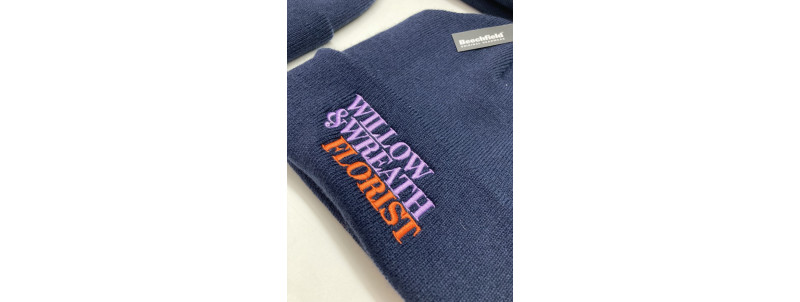
When deciding between printing and embroidery for garment customisation, it is important to consider the type of graphics you’ll be using. We provide DTF (Direct to film) printing which provides much more detail and vibrant colours, whilst traditional embroidery results in a classic look but with a limited colour option.
Getting the colour right
DTF printing is a fairly new process, and enables digital printing of virtually any type of graphic. Because it is a digital process, it can handle shading and vivid colours easily and copes with fine detail fantastically well. The only thing you can't print is glitter or fluorescent, although you can get it quite close. With Embroidery, you are limited on colours as each colour is an actual thread. Embroidery cannot handle shading or fine detail.
Durability
In recent years, DTF (Direct-to-Film) transfers, a relatively new printing technique, have become much more well-known. These are digitally produced on an unique film and heat-pressed into the garment. So, how long does a DTF print last? Most manufacturers agree, that they may last 2-3 years with appropriate maintenance. If you need even more durable designs, embroidery is an alternative to DTF and can last longer. Remember that average life of a business t-shirt is less than 18 months though.
Cost Considerations
The cost of the garment itself is dependent on the quality and quantity desired. It is important to factor in what type of material, fit, and style will best suit your needs. For example, whether you’re looking for a comfy cotton t-shirt or a more sophisticated polo shirt, you’ll want to ensure that your customisation is the best it can be. Quality materials, careful customisation and attention to detail will all come in to play when choosing the perfect garment for your needs. So don’t forget to factor in quality and quantity when determining what type of garment will be best for your garment printing needs.
Design Considerations for Printing or Embroidering
When deciding on a design for printing or embroidering a garment, it is important to consider the size and placement of the design, as this could affect the overall aesthetic of the garment. If embroidery is your plan of action, it’s important to consider the type of thread, fabric, and colours you plan to use. Taking the time to consider these details can help ensure that you end up with a garment that looks good and stands the test of time.
You should also consider the type of fabric that will be used for printing or embroidering, as different types of fabrics may require different types of treatments in order to properly accommodate a design. We don't recommend large embroidery on garments like T-shirts as they thread will be heavy against the thinner garment material. As a guide, we normally print T-shirts, but Hoodies and Sweats can be printed or embroidered.
Conclusion
In conclusion, when it comes down to deciding between printing and embroidery for custom clothing, it’s important to consider a number of components, such as the look you’re going for, the size of the design, and the type of material being used. Printing is faster and more cost effective, but embroidery has better wearability. Ultimately, it depends on your needs and what you’re trying to accomplish with your custom clothing.